
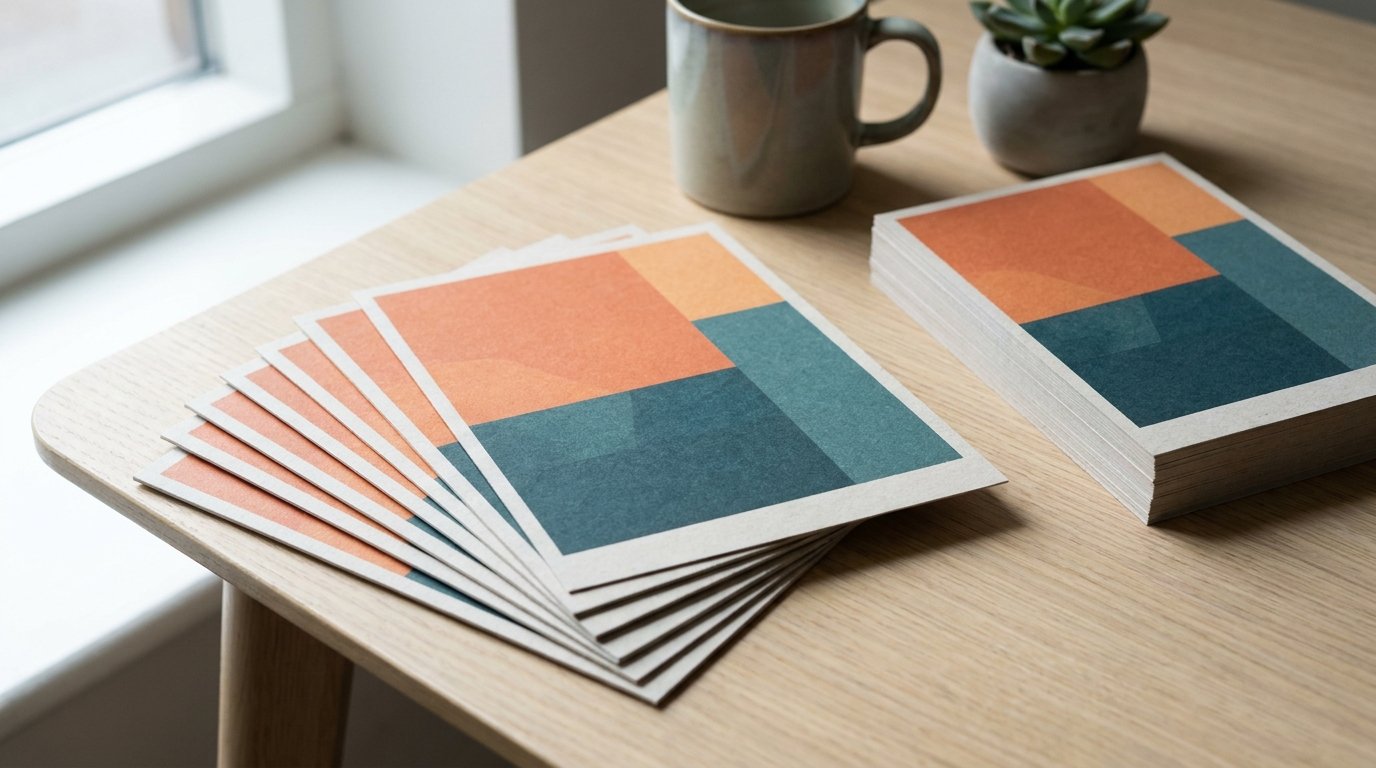
Most flyers that are handed out or posted through doors are printed on 130 to 170gsm paper, and 150gsm silk is the standard. Choose 250 to 450gsm when the flyer needs to feel like a card or last on a counter, such as a menu, price list or loyalty card. A5 is the most popular size.
Paper weight is measured in gsm, grams per square metre. The higher the number, the thicker and stiffer the sheet. Office printer paper is about 80gsm, so even our lightest flat flyer stock feels noticeably more solid. Here is how to choose the weight, the size and the finish.
What gsm should a flyer be?
| Stock | How it feels | Good for |
|---|---|---|
| 115gsm silk | Light, a little heavier than office paper | Large door drops and magazine inserts |
| 130gsm gloss | Light, with a shine | Low cost handouts |
| 150gsm silk | Our standard | Most flyers and event handouts |
| 170gsm silk | A little firmer | Flyers left on counters and in racks |
| 250gsm silk | Stiff, close to card | Menus, price lists and timetables |
| 350 or 450gsm silk | Card | Postcard-style flyers and loyalty cards |
Uncoated stocks, from 90 to 350gsm, have no sheen and are the easiest to write on, so they suit forms, vouchers and anything people fill in by hand.
What size should a flyer be?
| Size | Millimetres | Good for |
|---|---|---|
| A7 | 74 x 105 | Vouchers and tickets |
| A6 | 105 x 148 | One simple offer, and the lowest cost per flyer |
| A5 | 148 x 210 | The most popular size: room for a headline, detail and a map |
| DL | 99 x 210 | Leaflet racks and standard business envelopes |
| A4 | 210 x 297 | Menus, price lists and instructions |
| A3 | 297 x 420 | Event programmes and posters handed out |
| Square | 148 x 148 or 210 x 210 | Invitations and anything that should stand out from a pile |
What is the difference between a flyer and a leaflet?
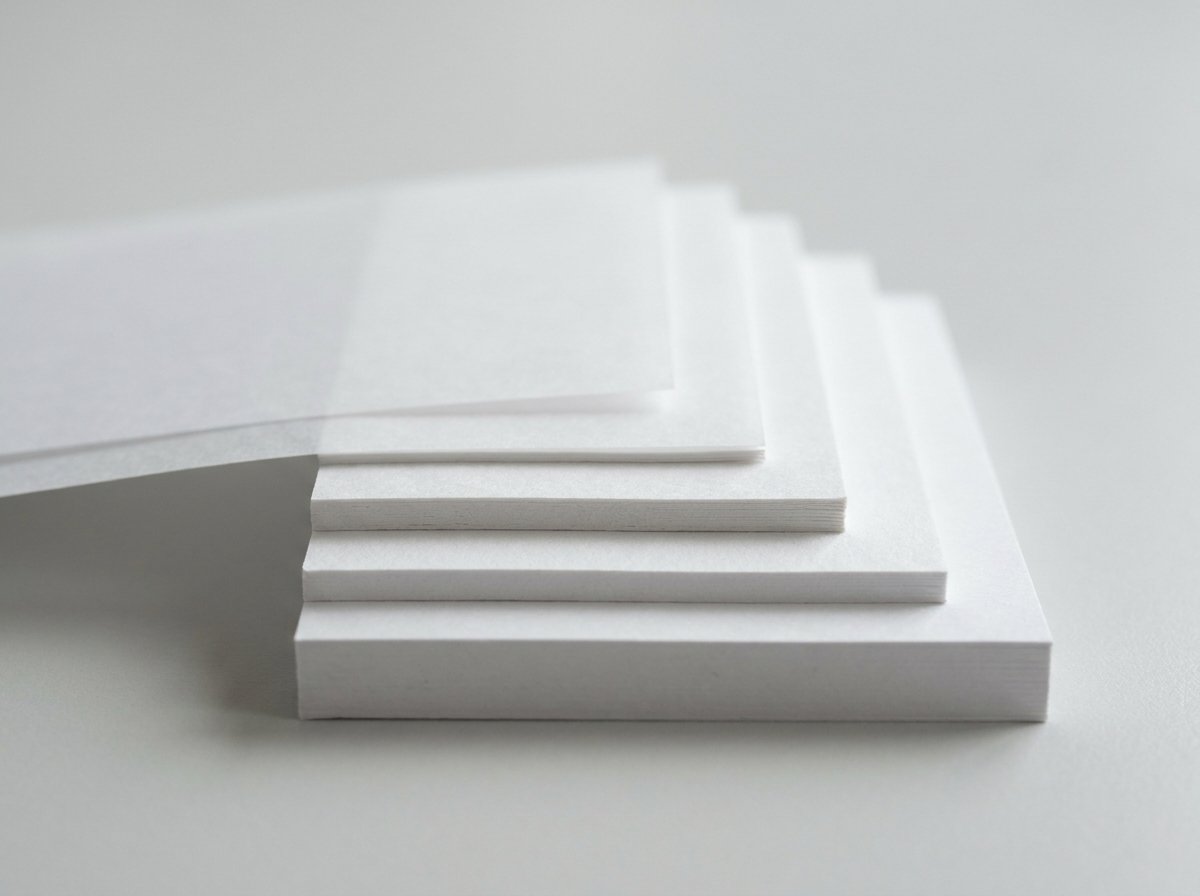
A flyer is a single flat sheet. A leaflet is folded. Folded leaflets are printed on both sides, from A6 up to A3 flat, with a half, C, Z, roll, cross or concertina fold. A4 folded to DL is the usual choice for menus and mailers. Stocks go from 115gsm silk up to 350gsm silk or uncoated, and 300gsm Invercote. Heavier stocks are scored before folding so the fold stays clean.
Silk, gloss or uncoated, and is lamination worth it?
Silk is the safe choice: smooth, good with photos, and it does not glare. Gloss makes colours pop. Uncoated feels natural and takes a pen. Lamination comes in matt, gloss or soft touch, on one side or both. It is worth it for flyers that get handled a lot or sit on a counter for weeks, and not for a one-off door drop. Spot UV and gold or silver foil pick out a logo or headline.
How many can you order, and how long does it take?
The minimum is 25 flyers or leaflets, and the price per flyer drops as the quantity goes up. Most runs are ready 48 hours after you approve the artwork. Very large runs can take longer, so tell us your date when you ask for a quote.
Artwork checklist
- A print-ready PDF in CMYK, with 3mm bleed
- Images at 300dpi at the printed size
- For folded leaflets, the flat spread with the fold lines marked
If you need something smaller and stiffer than a flyer, look at business cards or postcards. If you don't have artwork, our design team can lay it out for you.
Frequently asked questions
What is the most popular flyer size in the UK?
A5, which is 148 x 210 mm. It has room for a headline, a few lines of detail and a map or offer, and costs less per flyer than A4.
Can 350gsm be folded?
Yes. We fold up to 350gsm silk or uncoated, and 300gsm Invercote. Heavier stocks are scored before folding so the fold stays clean.
What gsm is a postcard?
We print postcards on 350 or 450gsm silk, 350gsm uncoated, or 300gsm Invercote.


